Who Is Blodeuwedd?
Blodeuwedd is a figure from medieval Welsh literature, especially Math fab Mathonwy, the Fourth Branch of the Mabinogi. Her story belongs to the Welsh Mabinogi tradition rather than the medieval Irish material that currently shapes many Rose Arcane Celtic pages.
In the surviving narrative, she enters the story through the circumstances surrounding Lleu Llaw Gyffes. Arianrhod, Lleu’s mother, places a series of conditions or destinies upon him. After Gwydion obtains a name and arms for Lleu through deception, Arianrhod says that he shall never have a wife from the race of women living on the earth.
Gwydion brings the problem to Math fab Mathonwy. Math and Gwydion then use magic to create a wife for Lleu from flowers. The page therefore identifies Blodeuwedd first as a Welsh mythic woman and literary figure of the Mabinogi: a magically made woman whose role in the story is beautiful, unsettling, and morally complicated.
A Woman Made from Flowers
The flower-creation episode is the scene that makes Blodeuwedd famous. In Lady Charlotte Guest’s translation, Math and Gwydion take the blossoms of oak, broom, and meadowsweet and form from them a maiden, who is then given the name Blodeuwedd.
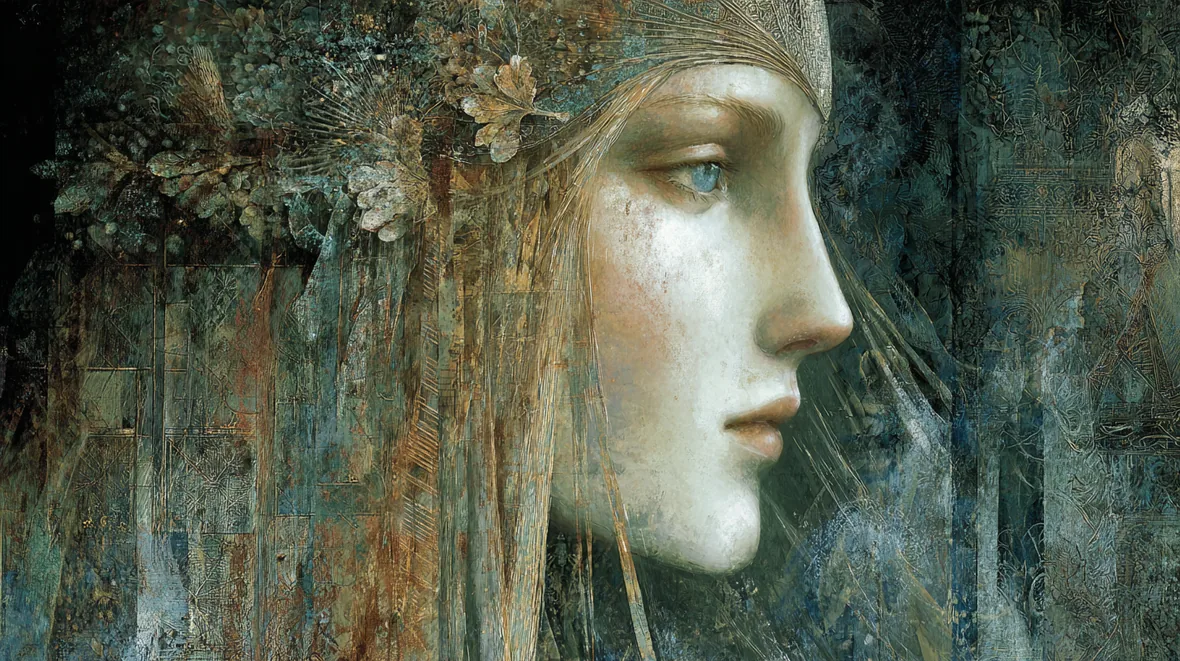
Those flowers matter because they shape the image-world of the story. They do not, by themselves, prove that Blodeuwedd was historically worshipped as a flower goddess, or that oak, broom, and meadowsweet carried one fixed doctrine in the medieval text. Later artists and modern readers often treat the flowers as symbols of beauty, construction, fragility, or imposed identity. Rose Arcane treats those readings as modern interpretations unless a source states more directly.
Marriage to Lleu Llaw Gyffes
Blodeuwedd is created to become Lleu Llaw Gyffes’s wife. That point is important. The narrative does not begin by presenting her as a woman choosing her own marriage; it presents her as the solution made for Lleu after Arianrhod’s prohibition.
This does not make the story simple. In the Fourth Branch, Lleu receives lands and status, and Blodeuwedd becomes part of the household world around him. Yet her origin remains artificial and socially determined. Modern readers often return to this detail because it raises questions about identity, agency, and whether a person created for another’s destiny can have a destiny of her own.
Gronw Pebyr and the Plot Against Lleu
When Lleu is away visiting Math, Blodeuwedd encounters Gronw Pebyr, lord of Penllyn. The medieval narrative presents their attraction as sudden and mutual. They become lovers, and Gronw advises her to discover how Lleu can be killed.
The conditions are strange and highly specific. Lleu cannot be killed inside or outside, on horseback or on foot. The weapon must be made over the course of a year, and the fatal position involves a bath, a roof, and an animal. Blodeuwedd learns these conditions from Lleu by seeming concerned for his safety, then sends the information to Gronw.
Gronw prepares the spear. Blodeuwedd arranges the demonstration, and Gronw strikes Lleu. Lleu does not die in an ordinary way; he flies away in the form of an eagle. The story should not be reduced to a lurid betrayal scene. The text gives action and consequence, but it does not fully explain Blodeuwedd’s interior motive in modern psychological terms.
Why Blodeuwedd Was Turned into an Owl
Gwydion searches for Lleu and eventually restores him from eagle form. After Lleu’s recovery, retribution follows. Gronw is killed by Lleu, and Blodeuwedd flees with her maidens. Her maidens drown, but Gwydion catches Blodeuwedd.
Gwydion does not kill her. Instead, he says he will do something worse: he transforms her into a bird that will not show its face in daylight and will be harried by other birds. The translation then explains that Blodeuwedd is an owl in the language of that time.
The owl transformation has become one of the most powerful parts of Blodeuwedd’s later reception. It invites modern symbolic readings of night, exile, punishment, metamorphosis, and survival. Those readings can be meaningful, but they should not be turned into unsupported claims about an ancient owl cult or a fixed historical owl goddess.
Is Blodeuwedd a Goddess?
Blodeuwedd is frequently called a Welsh or Celtic goddess in modern popular and spiritual writing, but the surviving medieval narrative most directly presents her as a magically created woman in the Fourth Branch of the Mabinogi.
Magical creation does not automatically establish divinity. Being made from flowers does not, by itself, prove that she was worshipped as a flower goddess; being transformed into an owl does not prove that she was historically an owl goddess. It is possible for later goddess classification to be interpretive, poetic, devotional, or symbolic without being the most direct description supplied by the medieval story.
Rose Arcane therefore identifies Blodeuwedd first through the surviving Welsh literary source. This does not require an absolute claim that she was never understood in divine terms by anyone, at any time. It simply keeps the evidence in order. For the broader problem of labels, see Celtic Goddesses and What We Mean by “Celtic Mythology”.
Modern Readings: Identity, Desire and Transformation
Modern readings often make Blodeuwedd a figure of imposed identity. She is made for Lleu, named by others, placed into marriage, and then punished when her desire moves outside the role created for her. That makes her story especially resonant for readers interested in autonomy and self-determination.
Other readings focus on betrayal and consequence. Blodeuwedd participates in the plot against Lleu, and the story does not treat that action lightly. Still, calling her simply evil flattens the narrative. Calling her simply liberated also flattens it. The Fourth Branch gives a harder story: created beauty, restricted agency, mutual desire, deception, violence, punishment, and transformation all occupy the same space.
The owl ending keeps the story open. It is punishment in the narrative, but in modern interpretation it can also become an image of changed form, night-vision, survival, and estrangement. Rose Arcane treats these as contemporary symbolic readings, not as medieval doctrine.
Blodeuwedd in the Wider Celtic Tradition
Blodeuwedd matters to Rose Arcane because she brings medieval Welsh material into a Celtic collection that has so far leaned strongly toward Irish narrative. Welsh mythology and Irish mythology can both belong under the modern umbrella term “Celtic mythology,” but they are not the same textual tradition.
Scáthach belongs to Ulster Cycle material around Cú Chulainn. Macha belongs to layered Irish traditions involving sovereignty, horses, Emain Macha, and place. Blodeuwedd belongs to Math fab Mathonwy, a Welsh Mabinogi narrative involving Math, Gwydion, Arianrhod, Lleu Llaw Gyffes, and Gronw Pebyr. Placing them together can help readers compare Celtic-language traditions, but it should not erase their regional and literary differences.
This is why broad terms such as “Celtic goddess” need context. Blodeuwedd has inspired goddess interpretations, but her Rose Arcane page begins with the medieval Welsh story. Continue through the Celtic Mythology hub, the Celtic Goddesses guide, and the journal note What We Mean by “Celtic Mythology” for the wider editorial framework.
Sources and Interpretation
This page uses medieval Welsh narrative material and manuscript context as its first lane. The National Library of Wales identifies the White Book of Rhydderch as a major manuscript witness for the Mabinogi, while the Fourth Branch itself provides the narrative sequence: Arianrhod’s prohibition, Blodeuwedd’s creation from flowers, the marriage to Lleu, Gronw Pebyr, the attack, and the owl transformation.
Translation is a second lane. English wording such as “meadowsweet,” “broom,” and “owl” comes through translators and editors, so the page avoids building a rigid symbolic system on translation details alone.
Modern reception is a third lane. Later goddess labels, flower-maiden readings, owl symbolism, and interpretations about autonomy or desire can be artistically powerful. They are presented here as later and modern readings, not as proof of one ancient Celtic pantheon.
Great Bear Music
Music Inspired by Blodeuwedd
Blodeuwedd's story also inspired a Great Bear Music album and related songs, translating the imagery of flowers, desire, betrayal, transformation, and the owl into original contemporary music. These releases are modern artistic responses to the literary tradition, not reconstructions of medieval or ancient Welsh music.
Album
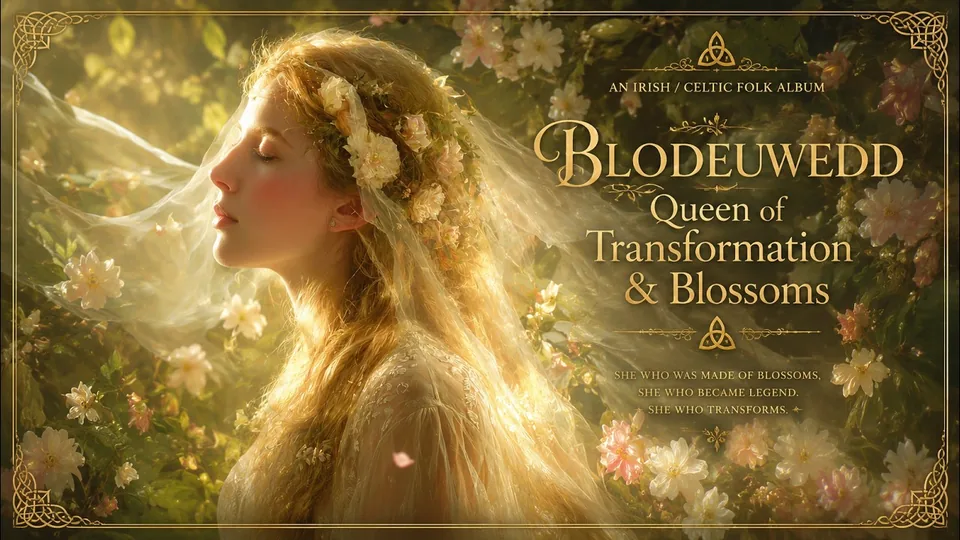
Blodeuwedd: The Flower and the Owl
A full Great Bear Music project shaped by the flower-created woman of the Fourth Branch, the tension between desire and role, and the transformation into owl.
Single
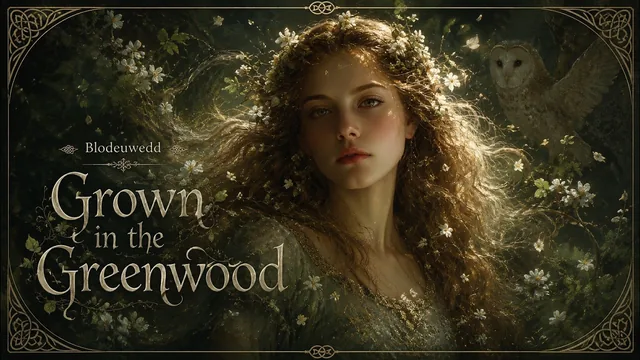
Grown in the Greenwood
A song drawn toward the flower-made beginning of Blodeuwedd's story.
Listen on YouTube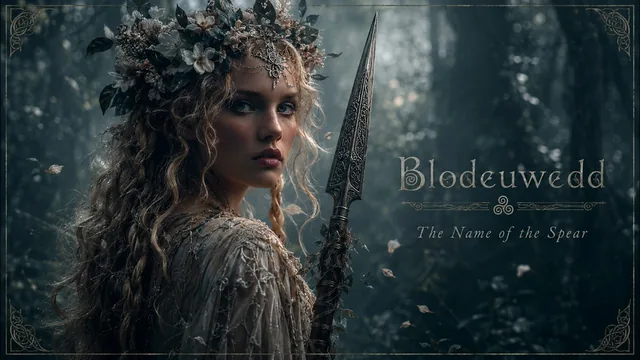
Single
The Name of the Spear
A song responding to the plot against Lleu and the dangerous knowledge around his wounding.
Listen on YouTubeExplore Next
Continue with Celtic Mythology, Celtic Goddesses, and What We Mean by “Celtic Mythology”. For Irish material in a different tradition, read Scáthach and Macha.