Who Is Áine?
Áine is an Irish goddess and legendary female figure most closely associated with Cnoc Áine, now Knockainey, in County Limerick. Her name and story gather several strands of Irish tradition: medieval narrative, Munster place-lore, later folklore around Lough Gur and Knockainey, and modern goddess interpretation.
The safest answer is therefore layered. Áine is not simply a character from one complete surviving tale, and she is not a universal Celtic goddess whose meaning can be carried unchanged across every Celtic-language culture. She is an Irish figure with strong local roots, especially in the landscape of east Limerick. Her traditions connect her with sovereignty, prosperity, sexuality, seasonal celebration, brightness, and the fertility of land and community.
Modern readers often encounter Aine, without the accent, as a sun goddess or summer goddess. Those phrases can point toward real parts of her reception: warmth, radiance, seasonal fire, and abundance. But Rose Arcane keeps the wider evidence visible, because Áine’s strongest surviving profile is not one simple solar function. She belongs to a place, to stories of rulers and violation, to local folklore, and to later imaginative memory.
Áine and Cnoc Áine
Cnoc Áine is essential to understanding her. The Placenames Database of Ireland identifies Cnoc Áine / Knockainey in County Limerick and explains the name as “the hill of Áine.” That place-name connection matters because many Irish mythic women are tied not only to plot, but to named landscapes, hills, wells, forts, assemblies, and territories.
In the tradition around Áine, the hill is not a decorative backdrop. It is a center of meaning. Medieval and later stories imagine a síd or Otherworldly presence there, while local folklore remembers the fort of Áine and related supernatural encounters in the Knockainey and Lough Gur area. Place-lore does not prove every later belief is ancient, but it does show how deeply a figure can become attached to a local landscape.
This is one reason Rose Arcane links Áine to the wider question of what we mean by Celtic mythology. “Celtic” is a broad umbrella; Cnoc Áine is specific. The hill, the Irish language place-name, County Limerick, and the Munster setting keep the page grounded.
Sovereignty, Prosperity and the Land
Áine is often read through sovereignty because her traditions connect female supernatural power with ruling families, territory, and the legitimacy or damage of kingship. In the story-world around Cath Maige Mucrama, Áine is associated with the hill and with Ailill Aulom, a Munster king. The narrative is not a simple sacred marriage tale. It involves violence, retaliation, bodily marking, and the loss of kingly wholeness.
That matters. Sovereignty in Irish literature is not only a political abstraction; it is often imagined through the land, prosperity, bodily integrity, and a ruler’s relationship to a female figure who may bless, test, refuse, or expose him. Áine’s connection with abundance and prosperity should be read through that landscape of power, not reduced to a generic “fertility goddess” label.
Her local force is also important. A goddess attached to a hill can become a figure through whom a community imagines land, continuity, protection, and seasonal well-being. Those ideas overlap with prosperity and fertility, but they are richer than a single function.
Love, Desire and Sexuality
Áine’s associations with love and sexuality need careful handling. Medieval and later narratives around her are not all romantic. In Cath Maige Mucrama, Ailill’s encounter with Áine involves sexual violation, the killing of her father, and her retaliation. Later folklore and literary retellings sometimes soften or reshape supernatural female sexuality into fairy-bride, lover, or enchantress patterns, but the violent edge should not be erased.
This does not mean sexuality is absent from Áine’s tradition. It means the topic belongs beside sovereignty, consent, power, and consequence. In Irish mythic material, sexual union, refusal, coercion, and the female body can all become ways of speaking about rulership and the land. Áine should not be reduced to “goddess of love,” yet her stories do invite discussion of desire, autonomy, and the dangers of men treating female power as something to seize.
Summer, Fire and Seasonal Tradition
Later folklore and local tradition associate Áine with summer, brightness, and seasonal celebration. Accounts around Knockainey and Lough Gur preserve memories of supernatural presence, local custom, healing, and the sídhe world. Some modern summaries connect Áine especially with midsummer fires or summer solstice celebration.
That seasonal reading is important, but chronology matters. It is safer to say that later folklore and local tradition associate Áine with summer and fire than to claim that every fire custom at Knockainey is securely documented as an unchanged pre-Christian rite. Seasonal traditions can preserve old patterns, but they can also be reshaped by Christian calendars, local memory, antiquarian writing, tourism, and modern spirituality.
Rose Arcane therefore treats summer and fire as part of Áine’s reception rather than as a single proof of origin. The warm, luminous atmosphere belongs on the page, but it is held alongside the hill, sovereignty, sexuality, and folklore.
Is Áine a Sun Goddess?
Áine is often called a sun goddess in modern summaries, especially because of her associations with brightness, summer, fertility, abundance, and seasonal fire. That description is not necessarily false as a modern interpretive shorthand, but it is too narrow if it becomes her whole identity.
The surviving Irish evidence does not reduce Áine to one solar function. Her strongest traditions are also tied to Cnoc Áine, Munster place-lore, sovereignty, prosperity, sexuality, Otherworld figures, and later folklore. Calling her only “the Celtic sun goddess” can make her seem more universal and simpler than the evidence allows.
Rose Arcane therefore prefers a broader description: Áine is an Irish goddess of sovereignty, summer, prosperity, sexuality, and the land, rooted especially in the traditions of Cnoc Áine / Knockainey in County Limerick.
Áine in Medieval Tradition and Later Folklore
Different Áine traditions come from different contexts. Medieval material gives us literary and political story-worlds, including the violent episode connected with Ailill and Cnoc Áine in Cath Maige Mucrama. The Metrical Dindshenchas preserves place-name poetry in which a radiant Áine appears in another context, showing how the name moves through learned medieval tradition.
Place-lore gives another layer: the hill, the name Knockainey, and the relationship between Áine and local geography. Folklore collected much later by the National Folklore Collection shows living regional memory around forts, Lough Gur, supernatural music, healing, and Áine as a sídhe or banshee-like presence.
Modern reconstruction and goddess spirituality form a fourth layer. They may draw meaning from the older material, but they are not the same as medieval evidence. This distinction is not meant to diminish modern interpretation; it protects the beauty of each layer by not pretending they are identical.
Modern Interpretations
Modern readers often turn to Áine for themes of feminine sovereignty, autonomy, abundance, sexuality, seasonal renewal, and belonging to land. Those readings can be powerful, especially because her traditions include both radiance and refusal. She is not only a gentle summer figure; she is also a reminder that prosperity and beauty do not erase boundary, injury, or consequence.
As a Rose Arcane figure, Áine can hold a warm and golden place in the Celtic collection. She expands the collection beyond warrior-centered women into sovereignty, local landscape, love, prosperity, and seasonal memory. But modern symbolism remains labelled as modern symbolism. It does not become a claim that medieval Irish tradition taught a fixed set of spiritual correspondences.
Áine in the Wider Celtic Tradition
Áine belongs to Irish tradition specifically. She should not be treated as interchangeable with Blodeuwedd from Welsh literature, Macha from Irish legendary tradition, Scáthach from the Ulster Cycle, or continental Celtic divine names. These figures may share broad themes of land, sovereignty, transformation, or female power, but they come from different texts, places, and periods.
That is why the broader Celtic Mythology hub and Celtic Goddesses guide use careful language. “Celtic goddess” can help readers find the subject, but it should not flatten Irish, Welsh, Scottish, Gaulish, and modern materials into one pantheon.
Music and Rose Arcane
Áine was among the earliest figures explored through the Celtic music world of Great Bear Music. The related album and songs are modern artistic responses to Áine’s traditions of summer light, sovereignty, abundance, desire, and landscape. They do not claim to reconstruct ancient or medieval Irish music.
Great Bear Music
Music Inspired by Áine
The album and featured songs translate Áine's Rose Arcane themes into contemporary music while keeping the source-aware story context separate from modern interpretation.
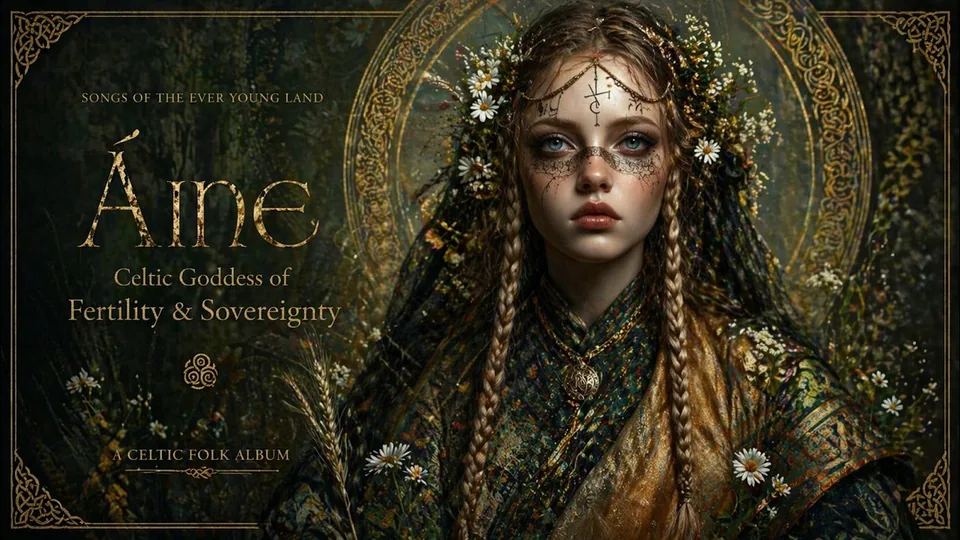
Album
Áine: Eternal Light & Ancient Flame
An original Great Bear Music album inspired by Cnoc Áine, sovereignty, summer, prosperity, desire, seasonal light, and the living landscape.
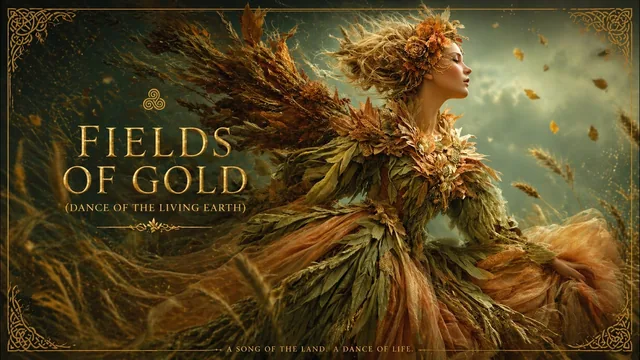
Single
Fields of Gold (Dance of the Living Earth)
A song centered on abundance, landscape, movement, and the living fertility of the earth.
Listen on YouTube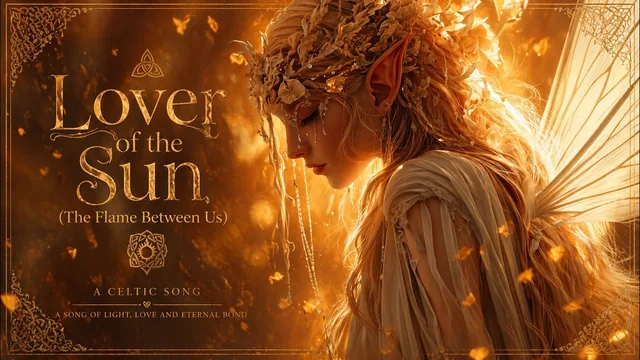
Single
Áine: Lover of the Sun
A luminous song drawing on Áine's modern associations with summer, brightness, desire, and solar imagery.
Listen on YouTube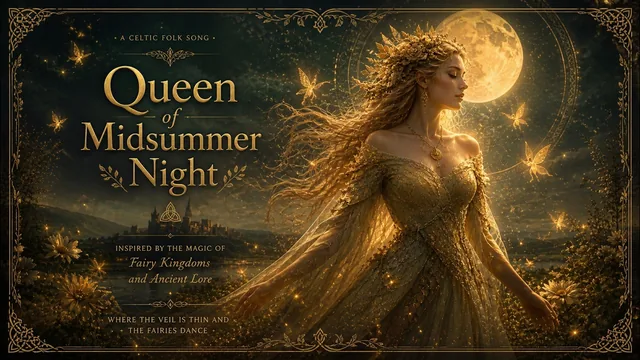
Single
Queen of Midsummer Night
A midsummer-inspired song shaped by seasonal light, celebration, sovereignty, and later folklore around Áine.
Listen on YouTubeSources and Interpretation
This page uses medieval Irish material, place-name evidence, later folklore, and modern scholarship as separate lanes. Cath Maige Mucrama is used for the Ailill and Cnoc Áine narrative context. Logainm is used for the place-name Cnoc Áine / Knockainey. Dúchas materials are used as later folklore evidence, not as direct proof of medieval belief.
The “sun goddess” label is treated as a modern and interpretive summary rather than the whole of Áine’s source-supported identity.
Explore Next
Continue with Celtic Mythology, Celtic Goddesses, Macha, Blodeuwedd, Scáthach, What We Mean by “Celtic Mythology”, and Great Bear Music.